

In order for us to teach girls to redefine and embrace failure, it’s important that we as parents and educators understand how girls internalize failure.
For many girls, the pressure of perfection limits them from taking risks, prevents them from raising their hand in class or participating in new activities, diverts them from expressing their creativity and ultimately stops them from pursuing their dreams.
When they internalize failure, girls (and women) falsely believe that something is innately wrong with them. In her book Mindset, Stanford psychology professor Carol Dweck says that this is a result of "fixed mindsets," such as when a girl considers that a poor grade is a criticism of herself as a person rather than a mark that reflects her effort or interest. If a girl has a growth mindset, on the other hand, she's able to accept failure, since she realizes that she's a work in progress and will improve. A poor grade now doesn't mean a poor grade in the future. It's a matter of perspective, and a powerful one at that.
By creating an environment where girls are free to fail, we encourage them to have a growth mindset, to be curious, bold and daring. We demonstrate to them that it's okay to be wrong, helping them move beyond failure to savor the progression of their projects, watch their ideas unfold, and arrive at eventual success.
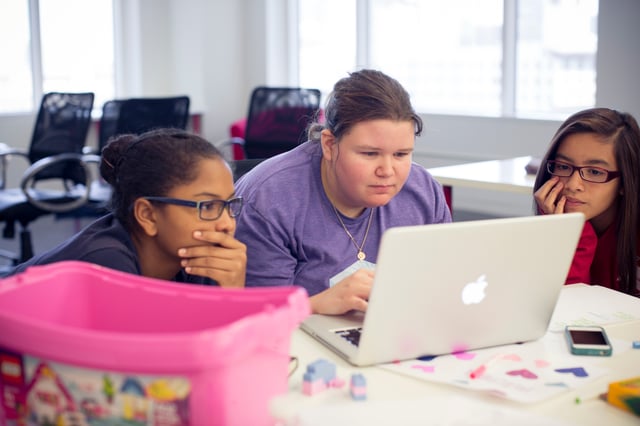
So how do we teach young girls to stand up to their fear, confront failures and start up to achieve success? We must redefine failure and instill the growth mindset; nurture girls’ self confidence starting at an earlier age. We must give girls mentors, such as strong women leaders who have walked a similar path. Finally, we must not only expose girls to failure, but we must also teach them that learning how to overcome failure will eventually lead to great success.
In 2013, with these thoughts in mind, I started VentureLab, a nonprofit dedicated to teaching entrepreneurial skills to children—with a particular focus on teaching girls.
After conducting dozens of camps and class modules, I have found something remarkable: When girls are exposed to entrepreneurial thinking, a profound change takes place. They become aware of opportunities around them. They learn to problem-solve. They think more critically and creatively. The result: they become more confident and experimental in their ability to tackle challenges.
In my next post, I explore how girls absorb unconscious stereotypes early on and how to confront this. In the meantime, I'd love to hear about your experiences with the girls in your life. How do they deal with failure, and how you encourage them to embrace it and move beyond it? What's happened when you did this, how did these girls respond? Share in the comments below!