

Fear of failure, and believing you are a failure, inhibit the creative process and the feelings and intuition that are essential to an entrepreneur’s ingenuity.
“One of our educational failures is a lack of serious recognition and attention towards the ‘gut feeling’ or inclination of common sense,” says Dr. John Burnside, chief of internal medicine at the Hershey Medical Center in Pennsylvania. Such lack of recognition is especially important for girls. A girl who is paralyzed by the constraints of perfection isn’t likely to pursue quantitative subjects where learning is cumulative and answers are typically right or wrong.
Lifting the stigma of failure can allow girls to be in touch with their senses—muscular feeling, physical sensations, intuitive sensations, kinesthetic responses, and mental imaging, all of which play important roles in scientific thinking. Instead of being something foreign and intimidating, scientific learning becomes real; physics becomes physical.
All of this illustrates the importance of reframing girls’ interpretations of mistakes and setbacks so that they become more willing to risk failure.
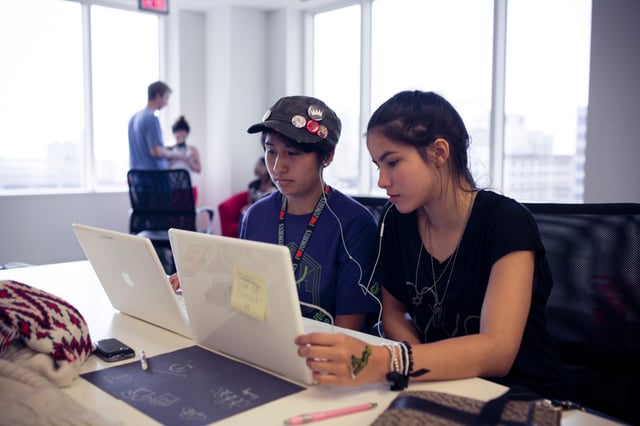
We need to condition girls not to internalize failure, but to view them dispassionately and learn from them. This is perhaps the most important single entrepreneurial skill. Fortunately, entrepreneurial education offers an antidote to the ill effects of standardized tests and grading since it teaches failure as part of the scientific method.
Failure is important. It yields information—whether it’s questions missed, or a hypothesis disproved. Failure means learning what not to do and trying again a different way. You come up with a hypothesis, you test it, and it either works or doesn’t, but it gets you closer to a solution.
Look at history—many well-known and celebrated scientists, innovators, artists and entrepreneurs failed their way to success. Thomas Edison, Henry Ford, J.K. Rowling are just a few. Thomas Edison always said, “I didn’t fail 1,000 times. The light bulb was an invention with 1,000 steps.”
Just as failure did not define these now-famous individuals, failure should not define girls. It's imperative that we teach girls that failing does not make them failures. Failure is a step in the process. We need to instill in girls the belief that they have the potential to overcome challenges and that with persistence they will achieve their goals.
In my next post, I'll continue to explore the cost of failure on girls, and how that affects their choices in what they pursue in education and career. Until then, I'd love to hear your thoughts on what you impart about failure to the girls in your life. Is failure a step in a process toward a goal, or is it a debilitating setback? Let me know your thoughts in the comments.