
Today we honor a pioneer in computer programming, whose notes on mentor Charles Babbage's "calculating machines" demonstrated an early understanding of how computers and software systems might be developed to accomplish complex tasks. Lovelace's training in mathematics at a young age, unusual for women in that era, was facilitated by her mother, who thought that rigorous exposure to math and science could prevent her daughter from becoming moody and temperamental like her poet father Lord Byron.

Lillian Moeller Gilbreth
Industrial Engineer (1878-1972)
Gilbreth, along with her husband, conducted rigorous investigations into time and motion efficiency for factory workers, developing the field that now known as industrial engineering. Their efforts revolutionized factory management and wartime production efforts. Two of her children went on to write about their family's upbringing, describing many instances of "motion study" as applied to the management of 12 children, in the book Cheaper By the Dozen.
Grace Murray Hopper
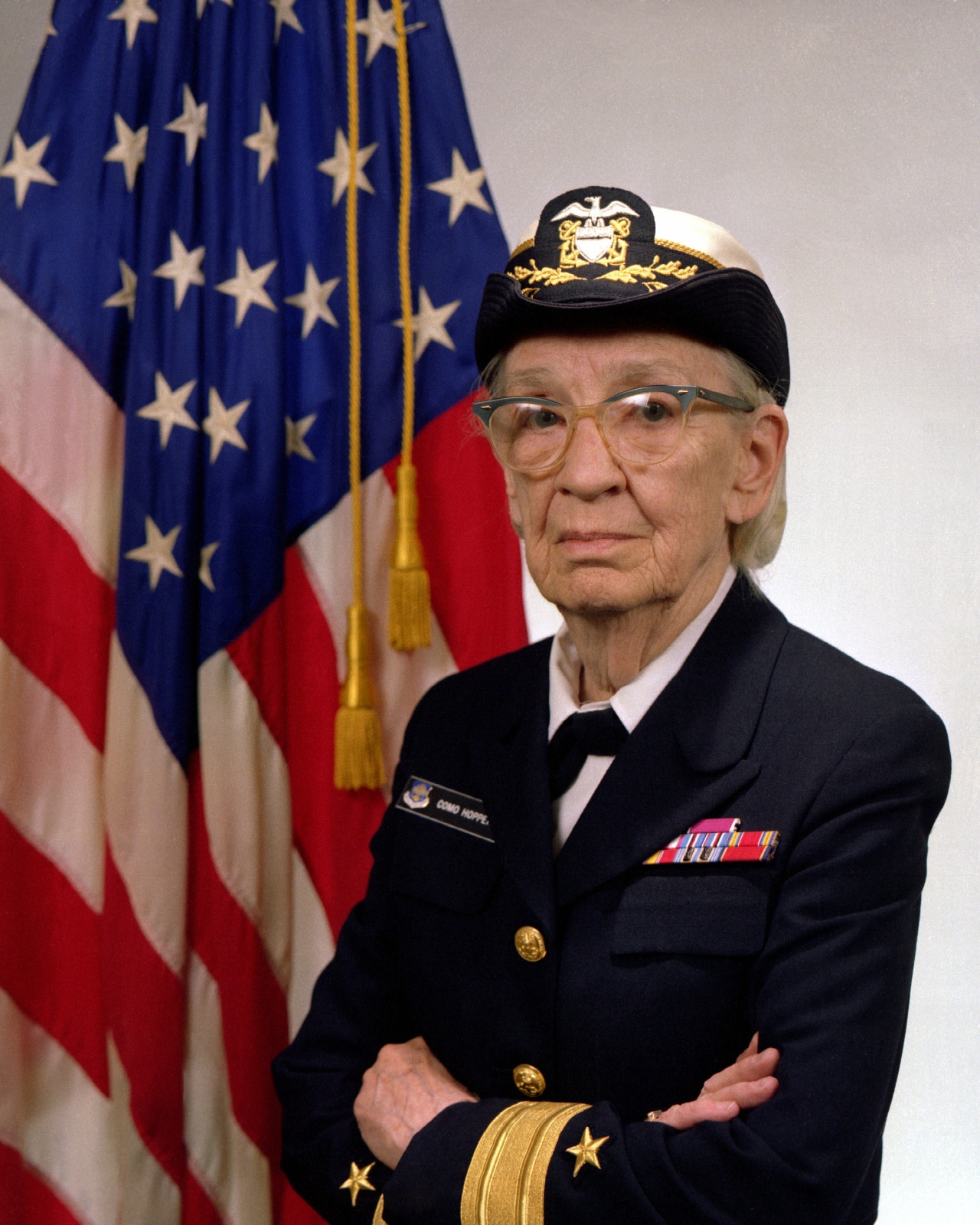
Mathematician (1906-1992)
Hopper trained as a mathematician and quickly dived into computer science work as an officer in the Navy. She is known for her early work on programming the Mark I computer at Harvard, and for developing the first running compiler, which allowed early computer to move beyond simple arithmetic calculations. The phrase "debugging", already used to describe the removal of errors in programming code, was popularized by Hopper after she found an actual bug stuck in a Mark II.

Reatha Clark King
Chemist (1938- )
After six years of work in industry and with the National Bureau of Standards, King returned to academia, eventually becoming president of Metropolitan University in Minnesota. At that institution, she focused extensive efforts on creating opportunities for minorities and women in higher education. She is extensively involved in social and political foundation work and is widely respected for her work to create academic opportunities to more students.
Interested in learning more? Check out these resources - use them to encourage an interest in science in every young person you know!
Biographies in Science - Eastern Illinois University
Women in Science, Technology, Engineering and Mathematics - WAMC Northeast Public Radio